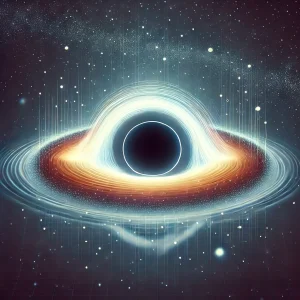
Hawking Radiation: How Black Holes Slowly Vanish
Introduction Black holes are often thought of as inescapable cosmic traps, pulling in everything—including light—beyond their event horizons. However, in the 1970s, renowned physicist Stephen
Introduction Black holes are often thought of as inescapable cosmic traps, pulling in everything—including light—beyond their event horizons. However, in the 1970s, renowned physicist Stephen
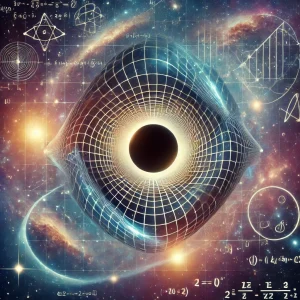
Introduction Cosmology, the study of the universe’s structure and origins, relies heavily on complex mathematical tools. Among these, Geometric Algebra (GA) has emerged as a
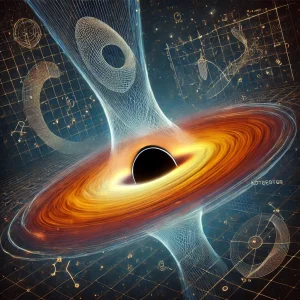
Black holes have fascinated scientists and the public alike for decades. Their mysterious nature, immense gravitational pull, and ability to warp spacetime make them one of the most intriguing cosmic objects. Traditionally, physicists have used tensor calculus and differential geometry to describe black holes. However, another powerful mathematical framework—Geometric Algebra (GA)—is emerging as a valuable tool for understanding black holes and their properties more intuitively. In this blog, we explore how geometric algebra provides a fresh perspective on black holes.